
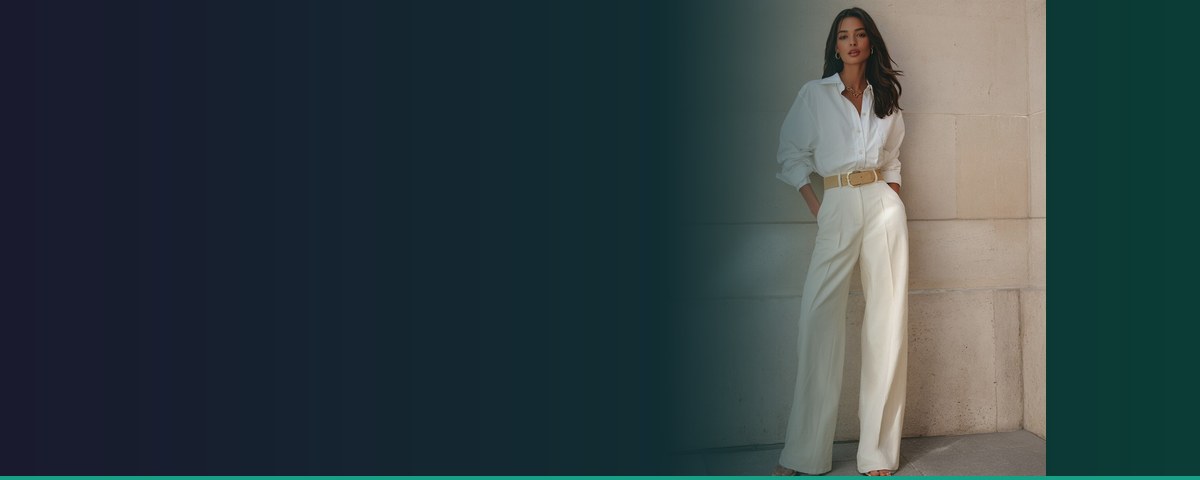
Dressing for your body type means choosing cuts, lines, and volume that create visual balance between your shoulders, waist, and hips — matching clothes to the proportions you actually have. It is not about hiding anything or correcting a "flaw." It is simply about proportion, so an outfit reads as intentional rather than accidental, and the goal is the same for everyone: a silhouette that looks considered.
This works at every size and every height. Body shape describes the relationship between your measurements, not how large or small those measurements are — which is why a petite woman and a plus-size woman can share the exact same shape and benefit from the same tactics. This guide defines all five shapes, shows you how to identify your own in ten minutes at home, and then walks through the styling goal and best silhouettes for each. Where a fuller, standalone guide exists, we link straight to it.
The 5 body shape types at a glance
The five body shape types are hourglass, pear (triangle), inverted triangle, rectangle (straight) and apple (round). Each is defined by which part of the body is widest — bust, waist or hips — and how defined the waist is, measured as proportions rather than sizes.
- Hourglass — bust and hips within about 5% of each other, waist at least 25% narrower than both. Keep the waist visible. Full hourglass guide
- Pear (triangle, spoon) — hips more than about 5% larger than the bust, with a defined waist. Add width and interest up top. Full pear guide
- Inverted triangle — shoulders or bust more than about 5% larger than the hips. Soften the top, add volume below. Full inverted triangle guide
- Rectangle (straight, banana, athletic) — bust and hips balanced, waist less than 25% narrower. Create a waist, or lean into the clean line. Rectangle section below
- Apple (oval, round) — fullness through the midsection, waist close to or above the hips, slimmer legs. Lengthen the torso and show the legs. Apple section below
Almost no one is a textbook example of a single shape — most people are a blend, leaning toward one. That is normal, and it does not undermine the approach. Identify the proportion that is most pronounced and style for it.
How to find your body shape at home
You need a soft tape measure and about ten minutes. Wearing close-fitting clothing or underwear for accuracy, take three measurements and keep the tape level with the floor at each point:
Bust: around the fullest part of your chest, keeping the tape straight across your back
Waist: around the narrowest part of your torso, usually about an inch above your navel
Hips: around the fullest part of your bottom and hips, with your feet together
Now compare the three numbers. The decision is about which measurement is largest and whether the waist is clearly defined:
- Bust and hips within ~5%, waist noticeably smaller (clearly narrower — roughly a quarter smaller in most guides) → hourglass
- Hips are the largest number, meaningfully wider than the bust → pear / triangle
- Bust and shoulders are the largest, wider than the hips → inverted triangle
- Bust and hips within ~5%, waist less than 25% narrower (waist divided by hips roughly 0.80–0.90) → rectangle / straight
- The waist is your fullest measurement, or close to it (waist divided by hips roughly 0.90 or above), bust usually fuller than hips, and legs comparatively slim → apple / round
If two shapes seem to fit, you are between shapes — extremely common. Pick the one that is more pronounced and borrow from both. And remember to include your shoulders in the assessment: shoulder width relative to hip width is what separates a pear from an inverted triangle when the bust measurements are similar. If your measurements do not settle the question, stand square in front of a mirror and look at the overall line: where does your body visibly widen, and is there an obvious inward curve at the waist?
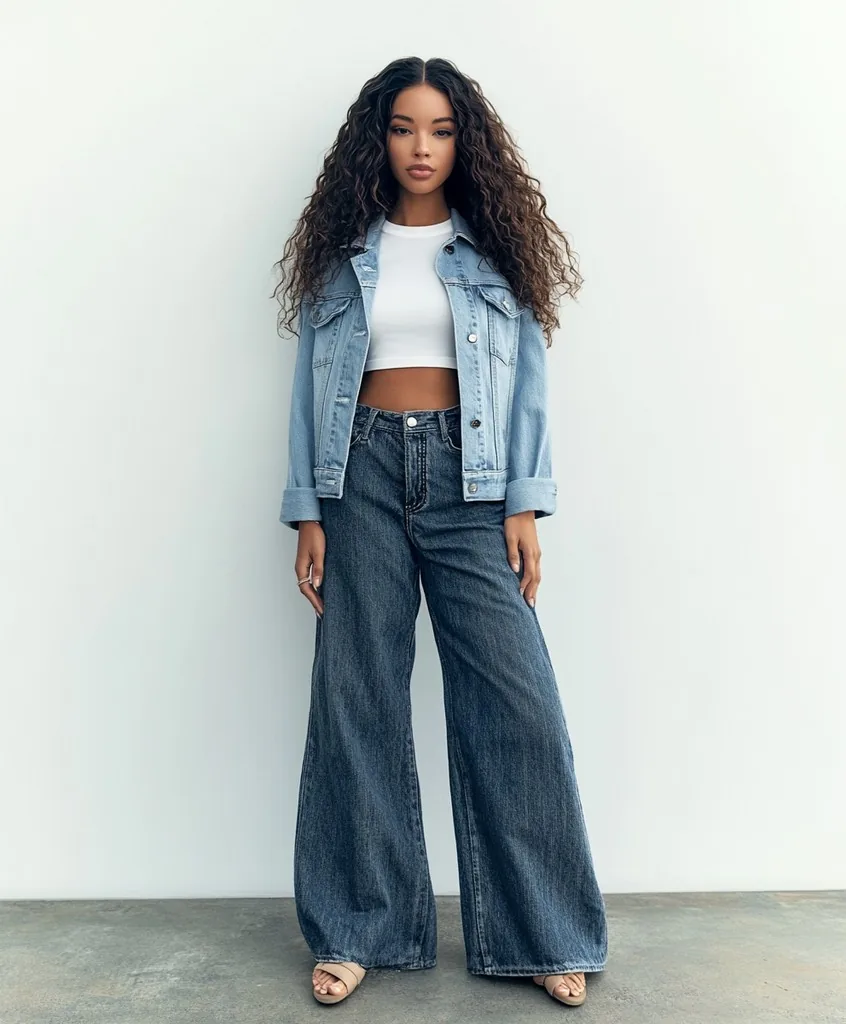
Dressing an hourglass figure
The goal: show off the natural balance and waist definition you already have, rather than hiding it under volume.
Because your bust and hips are balanced and your waist is already the narrowest point, the winning move is simply to keep the waist visible. Choose tops that follow the body and sit at or above the waistband — wrap tops, V-necks, and fitted knits — rather than boxy cuts that draw a straight line from shoulder to hip. For bottoms, high-waisted trousers, jeans, and pencil or gently A-line skirts anchor the look at your narrowest point. Wrap dresses, fit-and-flare styles, and bodycon in a fabric that skims (jersey, ponte, crepe) are the classic dress choices because they define the middle without clinging.
What to de-emphasise: drop-waist and shift silhouettes that erase the waist, low-rise bottoms that cut across the hip, and stiff fabrics that stand away from the body. If you love an oversized piece, reintroduce the waist with a belt or a half-tuck so the outfit reads as deliberate.
For the complete breakdown, see our full guide: How to Dress an Hourglass Body Shape.
Dressing a pear (triangle) figure
The goal: balance a fuller lower body by adding visual interest and width up top, so the shoulders and hips read as more even.
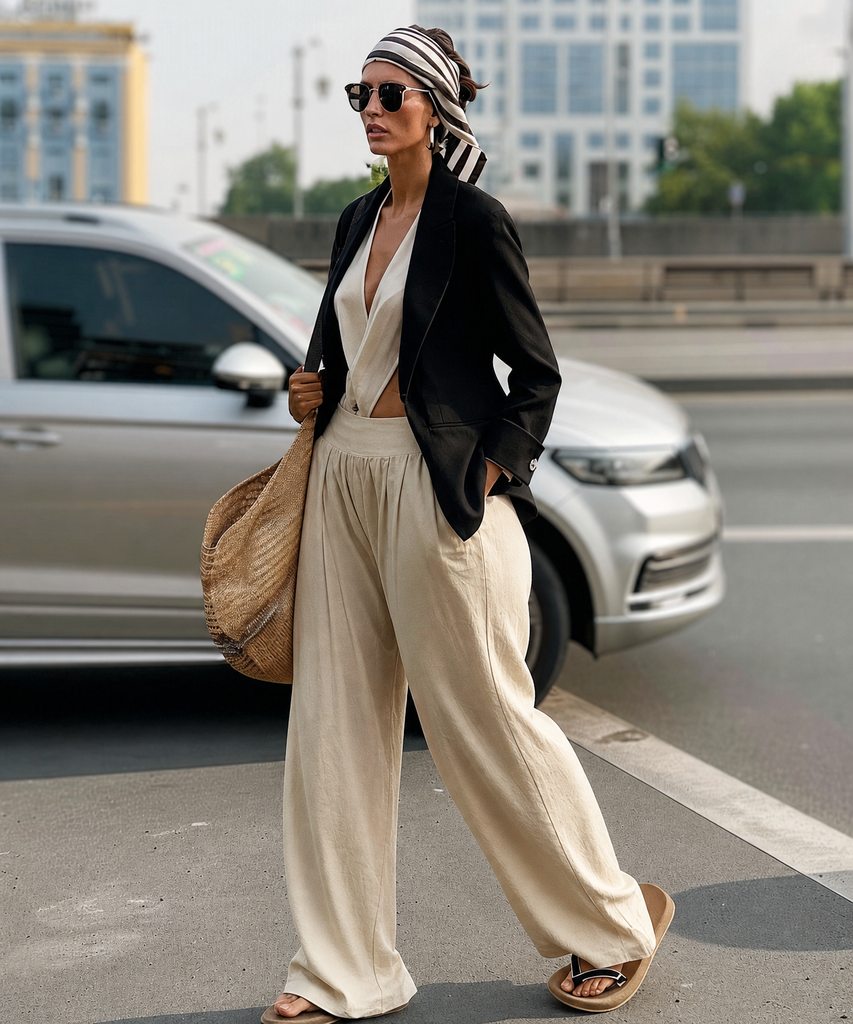
With the hips as your widest point, the strategy is to draw the eye upward and broaden the shoulder line. Tops do the heavy lifting: boat necks, off-shoulder styles, structured shoulders, statement sleeves, and lighter or brighter colours on top all add presence to the upper body. Keep necklines and detail — prints, texture, embellishment — above the waist. For bottoms, choose darker, matte, cleanly cut pieces: straight or bootcut trousers and A-line skirts that skim the hip without adding bulk, in a fabric that drapes rather than clings. A-line and fit-and-flare dresses that fit the top and flow over the hip are ideal.
What to de-emphasise: skinny bottoms in pale or shiny fabrics that spotlight the hip, hip-level pockets and embellishment, and tapered trousers that make the hip look wider by comparison. The aim is a top half with enough visual weight to match the bottom.
For the complete breakdown, see our full guide: How to Dress a Pear Body Shape.
See outfits on your actual body shape
Stylin shows every look on the body shape you relate to, styled from your own clothes — free on iOS.

Dressing an inverted triangle figure
The goal: soften and narrow the shoulder line while adding volume and interest to the lower body, so the hips catch up to the shoulders.
This is the mirror image of the pear, so the tactics flip. Up top, keep things clean and softening: V-necks and scoop necks that open the chest, raglan or dropped-shoulder sleeves rather than heavily structured or padded shoulders, and darker, matte tops without horizontal detail across the bust. Down below, add the volume: wide-leg and flared trousers, full or pleated A-line skirts, and lighter colours, prints, or texture on the bottom all build out the hip to match the shoulders. Fit-and-flare dresses and anything that nips slightly at the waist and flares below work beautifully.
What to de-emphasise: shoulder pads, puff and cap sleeves, wide boat necks, and busy prints across the chest — all of which broaden an already-broad top. Skinny or tapered bottoms also exaggerate the contrast; give the lower half some volume instead.
For the complete breakdown, see our full guide: How to Dress an Inverted Triangle Body Shape.
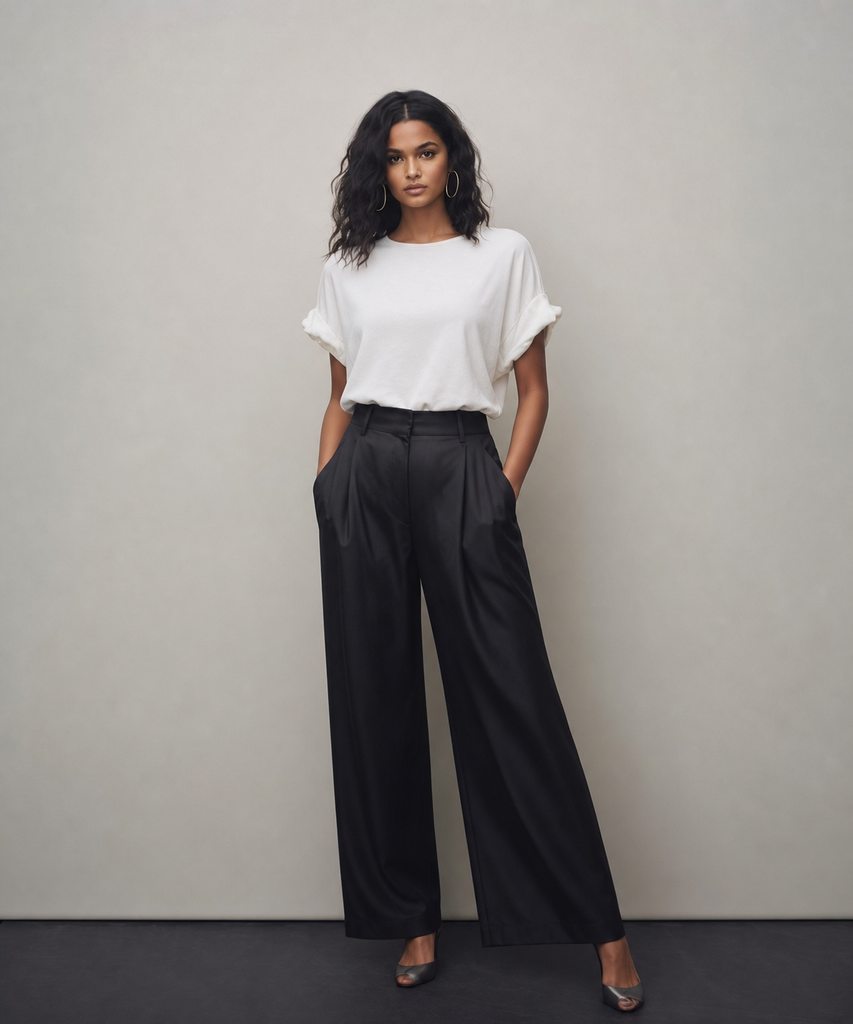
Dressing a rectangle (straight) figure
The short answer: a rectangle — also called a straight, banana, athletic or "H" shape — has a bust and hips within about 5% of each other and a waist that is less than 25% narrower than both, so the body reads as a clean column from shoulder to hip. You dress it one of two ways: build in a waist and a little curve, or lean into the straight line with sharp, minimal tailoring.
How to tell if you are a rectangle
The rectangle shares its first rule with the hourglass — balanced bust and hips — and differs only on the waist. Using the same three measurements from the section above, the markers are:
- Bust and hips are balanced — within about 5% of each other in circumference, exactly as on an hourglass
- The waist is only gently defined — less than 25% narrower than the bust and hips. As a waist-to-hip ratio (waist divided by hips), that usually lands between about 0.80 and 0.90
- Shoulders line up with the hips — neither is clearly the widest point, so the frame reads as straight rather than tapering either way
- UK 8 / US 4 — bust 84cm, waist 69cm, hips 86cm (33–27–34 inches)
- UK 12 / US 8 — bust 91cm, waist 76cm, hips 94cm (36–30–37 inches)
- UK 16 / US 12 — bust 102cm, waist 85cm, hips 104cm (40–33½–41 inches)
- UK 20 / US 16 — bust 112cm, waist 94cm, hips 115cm (44–37–45 inches)
Compare these with the hourglass sets in our hourglass measurements guide: bust and hips are just as balanced, but here the waist is only about 18–20% narrower than the hips rather than 25% or more. That single difference is what separates the two shapes.
Two borderlines are worth knowing. If your waist-to-hip ratio sits between about 0.75 and 0.80, you are in the overlap between a soft hourglass and a curvy rectangle — try waist-defining pieces from both guides and keep whichever reads better in the mirror. At the other end, if your ratio creeps towards 0.90 and the extra width sits at the front of your stomach rather than evenly around the torso, read the apple section below as well. The names are interchangeable, by the way: straight, banana and H all describe the same proportions, and "athletic" is usually used when the same straight frame is also lean or muscular. The styling does not change.
What a rectangle looks like at different sizes
A petite rectangle often reads as lean and youthful, and the main risk is scale: big peplums, wide belts and heavy volume can swamp a small frame, so choose narrow belts, a modest flare and cropped jackets that end at the waist. A tall rectangle carries column dressing, wide-leg trousers and long coats better than almost any other shape, and can take bolder volume at the hem. A plus-size rectangle is often misfiled as an apple; the difference is that weight is spread evenly around the torso rather than concentrated at the front of the middle, and the arms and legs stay in proportion with the body. Waist definition still works at larger sizes, but it looks best built into the garment — a wrap, a seam, a belted jacket — rather than a wide, tight belt pulled over a soft knit.
Tops for a rectangle
Tops should add shape at the bust or the waist, or both. Peplum tops are the single most efficient piece, because they build the illusion of a narrower waist and a fuller hip in one garment. Wrap tops and wrap cardigans create a diagonal line that suggests a waist, and tops with ruching, gathering or a seam at the natural waist do the same. Detail at the bust — ruffles, pockets, a sweetheart or square neckline, a subtle puff sleeve — adds curve up top. If you prefer a plain top, tuck or half-tuck it into high-waisted bottoms so the waistband does the defining.
Bottoms for a rectangle
Bottoms are where you add hip. Paperbag-waist trousers, pleat-front and wide-leg styles, full or A-line skirts and flared jeans all introduce volume below the waist, which makes the waist above them look narrower by comparison. Pockets, yokes and lighter washes at the hip help too. High rises work better than low ones because they set the waistline where you want it seen. Straight-leg and slim trousers are perfectly fine — they simply need the curve to come from the top half or a belt instead.
Dresses and jumpsuits for a rectangle
Look for dresses that manufacture a waist: wrap dresses, fit-and-flare cuts, belted shirtdresses, and styles with a seam or cut-out at the waist. Jumpsuits work best with a belt or a drawstring. If you would rather lean into your line than fight it, straight shift and slip dresses look sharp and modern on a rectangle — add a belt whenever you want more shape, and let a strong shoe or a structured bag give the outfit its focal point.
Jackets and outerwear for a rectangle
Belted trench coats and wrap coats are the obvious winners because they cinch without effort. Tailored blazers with a nipped waist or a single button at the natural waist add shape; a cropped jacket that ends at the waist marks the narrowest point clearly. The rectangle is also one of the few shapes that suits boxy, oversized and double-breasted coats without much adjustment — the straight cut echoes your frame, so it looks deliberate rather than shapeless.
What to avoid, and why
The one real trap is an outfit with no point of definition anywhere: a shapeless top over straight bottoms in a single flat colour lets the silhouette flatten out and the eye has nowhere to land. Very wide, stiff belts on soft knits can also backfire, because they bunch the fabric above and below and make the middle look wider rather than narrower. Beyond that, the rectangle's strength is versatility — colour-blocking with a darker panel at the waist, layering pieces of different lengths, and mixing textures all add dimension without any rules to break.
Dressing an apple (round) figure
The short answer: an apple — also called an oval or round shape — carries its fullness through the midsection: the waist is the fullest measurement or close to it, the bust is usually fuller than the hips, and the hips and legs are comparatively slim. You dress it by lengthening the torso with vertical lines, defining just under the bust rather than at the waist, and putting the legs on show.
How to tell if you are an apple
With the same three measurements, look at where the waist sits relative to the other two numbers. The markers are:
- The waist is the least defined part — close to, equal to, or larger than the bust and hips. As a rough guide, a waist-to-hip ratio of about 0.90 or above
- The bust is usually fuller than the hips, and the shoulders are at least as wide as the hips
- Hips, legs and often arms are comparatively slim — the fullness is concentrated through the torso, especially the front of the stomach and the upper back
- UK 12 / US 8 — bust 92cm, waist 82cm, hips 90cm (36–32–35½ inches)
- UK 16 / US 12 — bust 108cm, waist 99cm, hips 104cm (42½–39–41 inches)
- UK 20 / US 16 — bust 118cm, waist 110cm, hips 112cm (46½–43½–44 inches)
In each set the bust is the largest number, the hips are slightly smaller, and the waist sits within about 10% of the hips — a ratio of roughly 0.91 to 0.98. Compare that with a rectangle, where the waist is closer to 20% narrower than the hips.
The overlap between rectangle and apple sits roughly between 0.85 and 0.90, and the tape measure alone will not always settle it. The tie-breaker is where the width sits: stand side-on to a mirror. An apple shows forward fullness at the stomach and a fuller upper body over noticeably slimmer legs; a rectangle looks straight in profile, with weight distributed evenly. It is also worth knowing that waist-to-hip ratio is used in health screening — here it is only a styling measurement, telling you where clothes need room, and nothing more.
What an apple looks like at different sizes
A petite apple often has a short torso, so the distance between bust and waist is small: empire seams, short vertical layers and hip-length (not thigh-length) jackets keep the proportions in scale, while long, heavy tunics can swamp the frame. A tall apple has room for longline cardigans, dusters and column dressing that run the full length of the body. A plus-size apple gains the most from fabric choice — structured pieces with drape, such as ponte, crepe and heavier jersey, skim the middle instead of catching on it — and from a well-fitted bra, since lift gives an empire seam somewhere clean to sit and fall from. Many women also move towards an apple in midlife, so if your usual cuts have stopped working, re-measuring is the first step rather than the last.
Tops for an apple
V-necks, scoop necks and open collars are the foundation: they draw the eye upward and lengthen the torso. Empire-line and babydoll tops that fit at the bust and fall away cleanly skim the middle, and tunic-length tops worn over slim trousers create a long, easy line. Look for tops with a defined shoulder and fabric that drapes from it — a shirt in a fluid crepe rather than stiff cotton, a knit with some weight — and consider an untucked shirt with side splits, which lets the hem move rather than pulling across the stomach.
Bottoms for an apple
Your legs are usually your slimmest feature, so show them. Straight-leg, slim and bootcut trousers balance a fuller top half, and a skirt that ends at or just below the knee does the same. Choose flat-front styles with a smooth, comfortable waistband — a mid rise often sits more easily than a very high one that has to grip the fullest part of the stomach — and avoid bulky front pleats or pockets that add width at the middle. Darker bottoms with a lighter top work well; so does a single colour head to toe.
Dresses and jumpsuits for an apple
Empire-waist dresses are the classic choice for a reason: the seam sits just under the bust, where you are narrower, and the skirt falls clear of the midsection. Wrap dresses tied above the fullest point, shift dresses in a fabric with body, and shirtdresses worn unbelted or loosely belted high all work. A-line styles that flare gently from the bust are reliable; very clingy bodycon and dresses with a tight natural-waist seam are harder. Jumpsuits are easiest with a V-neck and a wide or straight leg, worn without a tight belt at the middle.
Jackets and outerwear for an apple
Open-front and longline pieces are your best tool: an unbuttoned longline blazer, a duster or a waterfall cardigan draws two strong vertical lines down the body and frames the torso instead of enclosing it. Single-breasted jackets with a low button stance lengthen the neckline, and coats with a gentle A-line or a straight, unstructured cut skim over the middle. Keep jacket hems either above the fullest point or well below it, and skip heavily double-breasted or belted-at-the-waist coats, which add width exactly where you want less.
What to avoid, and why
Avoid anything that grips or adds bulk at the midsection: tight waistbands, clingy thin jersey, cropped and boxy tops that end at the widest point, and wide belts cinched at the natural waist. Each one places a horizontal line or extra volume exactly where the frame is fullest, which widens rather than streamlines. Heavy chunky knits and busy horizontal prints across the stomach have the same effect. If you want waist definition, suggest it — a soft belt worn just under the bust, or a wrap tied above the fullest point — rather than compressing at the widest part. The aim is a clean, elongated line.
A universal principle: dress the proportion, not the size
Strip away the categories and every shape reduces to one idea: create balance between the top and bottom halves of your body, and define the waist to whatever degree is natural for you. A pear adds weight up top; an inverted triangle adds it below; a rectangle manufactures a waist; an apple lengthens the middle; an hourglass keeps its existing balance visible. Same principle, different levers.
Two things matter more than any single rule. The first is fit over size: a garment that fits your actual proportions will always flatter more than a "correct" style in the wrong fit. This is why tailoring is worth it — taking in a waist, shortening a hem, or adjusting a shoulder seam costs little and transforms how a piece sits. Buy for your largest measurement and have the rest brought in. The second is that shape is a starting point, not a rulebook. These are tools for looking intentional, not restrictions on what you are allowed to enjoy. If a "rule" contradicts what makes you feel confident, confidence wins. The frameworks here pair naturally with finding your personal style and building a capsule wardrobe, where proportion becomes one input among taste, colour, and lifestyle.
How Stylin dresses your body type
Knowing your shape is the easy part; the hard part is applying it consistently across every outfit, occasion, and shopping decision. When you set up the app, Stylin learns your body shape — from your measurements or a guided assessment — and filters everything it suggests through that lens. Instead of a generic feed, you see outfit combinations where the proportions are balanced for your figure and the cuts are appropriate — built first from clothes you already own, with any new pieces it suggests pre-filtered to your shape too. You can explore how this works on the body-shape feature page.
Frequently asked questions
How do I find my body shape at home?
Take three measurements with a soft tape: your bust at the fullest point, your natural waist at the narrowest point (usually about an inch above the navel), and your hips at the fullest point. Then compare them. If bust and hips are within about 5% of each other and your waist is clearly narrower, you are an hourglass. If your hips are the largest measurement, you are a pear. If your bust and shoulders are the largest, you are an inverted triangle. If all three are close and the waist is not much smaller, you are a rectangle. If your midsection is the fullest part with a less defined waist, you are an apple.
What are the 5 body shape types?
The five most commonly used body shapes are the hourglass (balanced bust and hips with a defined waist), the pear or triangle (hips wider than the bust), the inverted triangle (shoulders and bust wider than the hips), the rectangle (bust, waist, and hips a similar width with little waist definition), and the apple or round (weight carried through the midsection with a fuller upper body). These describe proportion, not size, and each shape occurs at every size and height.
Which body shape is most common?
Large fit-scan studies of women's measurements have found the rectangle to be the most common shape by a wide margin, with the pear, inverted triangle, and hourglass following, and the apple least common. Definitions vary between studies, so treat the ranking as a rough guide — and remember most people are a blend rather than a textbook example of one shape, with proportions that can shift with weight, age, and life stage.
Can your body shape change?
Yes. Your underlying frame — your shoulder and hip bone structure — stays fairly constant, but where you carry soft tissue changes with weight gain or loss, pregnancy, menopause, and ageing. Many women shift from a rectangle or pear toward an apple as they get older and carry more around the midsection. It is worth re-measuring every few years so your styling approach reflects your current proportions rather than an outdated idea of them.
Can you be two body shapes at once?
Yes, and most people are. Body shape is a spectrum rather than five separate boxes, so it is common to sit between two neighbouring types — hourglass and pear, rectangle and apple, or rectangle and inverted triangle. The measurement borderlines show where this happens: a waist-to-hip ratio between about 0.75 and 0.80 sits between hourglass and rectangle, and one between about 0.85 and 0.90 sits between rectangle and apple. Style for whichever proportion is more pronounced and borrow tactics from both guides. The underlying goal is the same for everyone: balance your shoulders and hips, and define your waist to whatever degree is natural for you.
How do I know if I have an apple body shape?
Measure your bust, natural waist and hips. You are likely an apple (also called oval or round) if your waist is close to, equal to or larger than your hips — a waist-to-hip ratio of roughly 0.90 or above — your bust is fuller than your hips, and your hips and legs are comparatively slim. If your ratio sits between about 0.85 and 0.90, stand side-on to a mirror: forward fullness at the stomach over slimmer legs points to apple, while a straight profile points to rectangle.
How do I know if I have a rectangle body shape?
You are likely a rectangle if your bust and hips are within about 5% of each other and your waist is less than 25% narrower than both — a waist-to-hip ratio of roughly 0.80 to 0.90 — with shoulders that line up with your hips. Rectangle is also called straight, banana or H. The only difference from an hourglass is the waist: an hourglass has the same balanced bust and hips, but a waist at least 25% narrower than both.
Is an athletic body shape the same as a rectangle?
Usually. "Athletic" is most often used for a rectangle on a lean or muscular frame: balanced bust and hips with little waist definition. But an athletic build with broad, muscular shoulders that are clearly wider than the hips — often called a swimmer's build — is an inverted triangle rather than a rectangle. Compare your shoulders with your hips: if the shoulders are more than about 5% wider, follow the inverted triangle guide; if they line up, dress as a rectangle.
Do body shape 'rules' still apply, or are they outdated?
The rules that told you what you weren't allowed to wear are outdated and were always a bit silly. The underlying observations aren't. Where a hemline stops does change how long your legs read; a defined waist does alter the shape of a silhouette; volume placed high does balance width lower down. Those are facts about proportion, not judgements about bodies. The useful shift is in how you hold them: treat them as a set of predictions about what a garment will do, so you can decide whether that's the effect you want. Sometimes it will be, sometimes you'll want the opposite, and both are legitimate.
Does body shape matter more than dress size?
For how clothes look on you, yes — comfortably so. Two people wearing the same size can carry their weight and width in completely different places, which is why the same dress can be flattering on one and awkward on the other despite fitting both. Size tells you which garment to take into the fitting room; shape tells you which garments are worth trying in the first place. It's also why shape holds steady as a guide through weight changes: your proportions tend to stay recognisably yours even when the number on the label moves.
Your body type is a starting point, not a set of rules — and the fastest way to make it useful is to see it applied to real outfits. Stylin learns your shape and taste, then builds looks from what you already own and fills the gaps with picks calibrated to your proportions, all through the app's body-shape outfit feed.