
The short answer: narrow the variables in order — check the weather to set your layers and shoes, glance at your calendar for the most demanding event, name whether you want low-effort or put-together, then reach for an outfit formula you already trust. That sequence takes under a minute and settles the choice before morning fatigue gets a vote.
"I have nothing to wear" — said by someone standing in front of a wardrobe full of clothes. If this sounds familiar, you're not being irrational. The problem is real, it has a name, and it's surprisingly easy to fix once you understand what's actually going on.
Why a full wardrobe still leaves you stuck
A full wardrobe leaves you stuck because of two things working together: decision fatigue and outfit blindness. Decision fatigue is the mental exhaustion of making too many choices, and by 7am your brain is already processing a queue of them. Outfit selection, which means combining several items into a coherent whole, is a surprisingly high-cognitive task to tackle before your first coffee, so a choice that feels impossible now often feels obvious by 10am. Outfit blindness is the second half: when clothes hang in a row, you stop seeing the combinations and register individual items instead of looks. The navy blazer and the cream trousers are both there, but your brain scans a list and finds nothing that jumps out rather than connecting them into an outfit. The result is genuine paralysis in front of clothes you like — not a lack of options, but too many decisions at your most depleted moment.
Studies show that the average person makes around 35,000 decisions per day. The quality of those decisions deteriorates over time — which is why a decision that feels impossible at 7am might feel obvious at 10am with nothing else on your mind.
In summary: You feel like you have nothing to wear because two forces overlap — decision fatigue drains the mental energy outfit-making needs at the worst possible hour, and outfit blindness stops you seeing the combinations already hanging in front of you. Neither is a taste problem nor a wardrobe-size problem, which is why buying more clothes rarely helps. The fix is to remove decisions from the morning and make good combinations easy to see, which is what the rest of this article sets out.
What helps, even without AI
Plan the night before. Even thirty seconds of choosing tomorrow's outfit before bed removes the decision from your most depleted moment of the day — obvious, yet almost no one does it consistently.
Create outfit formulas. A formula is a reliable combination you know works: dark jeans + white shirt + clean trainers, for example. Instead of reinventing the wheel every morning, you execute a proven pattern. Build five to ten formulas and rotate them.
Reduce the field. A smaller wardrobe of clothes you genuinely love is easier to dress from than a large one full of half-hearted purchases — the fewer items you never actually wear, the easier every morning becomes.
Good enough, decided quickly, from clothes you already own — that's the morning win.
A fast decision framework for any morning
A fast morning framework works by narrowing four variables in a fixed order until the outfit assembles itself, rather than facing every choice at once. Start from the day's anchor — the one thing you can't change — and let everything else follow. First check the weather, because it sets your top layer and footwear before anything else: a 9°C drizzle and a 24°C dry day call for two different starting points. Next read your calendar, and dress for the most demanding event of the day, since it's easier to dress down than up. Then name your mood honestly — low-effort and put-together are both valid, but choose on purpose. Finally, pick a formula that fits all three, matching a known outfit to the day instead of inventing one. On a running-late Tuesday that might mean dark jeans, a knit and boots for a cold day with a client call — decided in seconds, not minutes.
- 1. Check the weather first. It sets your top layer and footwear before anything else. A 9°C drizzle and a 24°C dry day call for two different starting points, so settle this before you touch a hanger.
- 2. Read your calendar. Your most demanding event sets the formality bar. Dress for the 3pm client call, not the morning at your desk — it's easier to dress down than up.
- 3. Name your mood. Be honest about whether today is low-effort or put-together. Both are valid; choosing on purpose beats drifting into whatever's nearest.
- 4. Pick a formula that fits all three. Reach for a combination you already trust rather than building from zero. The work is matching a known outfit to the day, not inventing one.
The whole sequence takes under a minute once it's a habit. The point isn't a perfect outfit — it's a confident one, chosen before fatigue gets a vote. If you're not sure which combinations actually suit you, working out your personal style first makes every one of these decisions faster.
In summary: To decide what to wear on any given morning, resolve four variables in order — weather, calendar, mood, then formula — and stop building outfits from scratch. Weather sets your layers and shoes, your calendar sets how polished you need to be, your mood sets the effort level, and a trusted formula turns all three into a finished look in seconds. The point is to decide before decision fatigue sets in, so aim for a confident outfit rather than a perfect one.
Outfit formulas by weather and season
Weather is the variable that derails most mornings, because it changes the answer daily. Pre-deciding a starting point for each condition removes the guesswork. Treat these as scaffolding, not rules — swap in your own colours and pieces.
- Hot and dry. One breathable layer doing the work: a linen shirt or a relaxed tee with loose trousers or a midi skirt, plus a flat sandal or clean trainer. Keep fabrics natural so you stay cool.
- Cold. Build in thirds — a base layer, a knit, and a coat — so you can shed one indoors. A roll-neck under a heavier jacket carries most cold days without much thought.
- Rain. Start from the shoes that can get wet, then a water-resistant outer layer, then keep everything underneath simple. Dark trousers and boots forgive splashes that lighter pieces won't.
- Transitional. Layer for the coldest part of the day and plan to peel back. A light knit over a shirt, with a jacket you can carry, covers a 10°C morning that becomes a mild afternoon.
If your colours feel off in certain seasons, it's often the palette rather than the pieces. A quick read of colour analysis explains why some shades lift your face and others flatten it across the year.
Outfit starters by occasion
Once the weather sets your layers, the occasion sets the polish. These are first moves, not full looks — somewhere reliable to begin so you're refining rather than starting cold.
- Working from home. Comfortable but not pyjamas: soft trousers or dark jeans with a decent knit. One step above loungewear keeps your head in work mode.
- Errands. Your fastest formula on rotation — jeans, a clean tee or jumper, trainers. Save the decisions for the days that need them.
- Office. A reliable spine of tailored trousers or a skirt with a shirt or fine knit, then a layer that signals effort. Swap the layer to shift the formality up or down.
- Dinner. Take a daytime base and lift one element — a sharper shoe, a darker palette, a single considered accessory. You don't need a different outfit, just a clearer one.
- Social and unstructured. Lead with the piece you feel best in and build around it. Comfort you can move in matters more than strict formality here.
The five-minute wardrobe reset
The five-minute wardrobe reset is a weekly tidy that makes good outfit choices the easy ones by changing what your eye sees first. Most daily friction is decided in advance by how your wardrobe is arranged, so five minutes of upkeep does more for your mornings than any single clever outfit. Pull the three or four pieces you reach for most to the front, where your eye lands first. Move anything you haven't worn in months out of the daily sightline — not out of your life, just out of the way, so it stops crowding the decision. Then group by type rather than colour, so combinations become visible instead of scattered — hanging all your knits together, for instance, lets you see which one works over today's shirt at a glance. Done weekly, this counters outfit blindness and keeps decision fatigue from creeping back, so the wardrobe does some of the choosing for you.
If you want to take it further, building a capsule wardrobe shrinks the field permanently so fewer choices remain to make.
Where AI actually helps
Everything above is a system you run by hand: a framework to narrow the variables, formulas for the weather, a wardrobe arranged to make good choices easy. It works — but it still asks you to do the matching when your judgement is weakest, which is the gap an AI stylist fills.
AI doesn't replace taste — it removes the work of translating taste into a specific outfit at 7am. A good AI stylist works from your actual wardrobe, not generic inspiration, and knows your colour palette, fit preferences and daily context. Open the app and it isn't starting from scratch: it has already run the framework and surfaced a handful of options that fit today's weather, calendar and mood.
The honest limit is worth stating: AI is only as good as what it knows about you. Tell it the occasion, weather and mood, and it runs the same system this article describes — faster, and without the fatigue. If you're curious how that matching happens, how AI personal styling works walks through it step by step.
What to tell an AI stylist for better daily results
- The occasion. "Work" is vague. "Office — client meeting at 3pm" is specific.
- The weather. A layering suggestion perfect at 10°C is useless at 25°C.
- Your mood. "Comfortable and low-effort" vs "I want to feel put-together today" produces genuinely different suggestions.
Frequently asked questions
Why do I always feel like I have nothing to wear even with a full wardrobe?
The main culprits are decision fatigue — the cognitive load of outfit selection at your most depleted moment of the day — and outfit blindness, where clothes hanging in a row stop you seeing the combinations. You see individual items, not looks.
What's the easiest way to decide what to wear each morning?
Plan the night before. Even thirty seconds of choosing your outfit before bed removes the decision from 7am when your mental resources are at their lowest. Building five to ten reliable outfit formulas you rotate through makes mornings significantly faster.
Does AI styling actually help with daily dressing decisions?
Yes — a good AI stylist works from your actual wardrobe, knows your colour palette and fit preferences, and surfaces outfit options in seconds. You're not starting from scratch each morning; it executes a personalised system on your behalf. It's most useful on the days you'd otherwise stall, when fatigue makes even simple matching feel like work.
How do I decide what to wear quickly when I'm running late?
Narrow the variables in order. Check the weather to set your top layer and shoes, glance at your calendar to find the most demanding event of the day, then reach for an outfit formula you already trust rather than building one from scratch. The whole sequence takes under a minute once it's a habit, and it spares you the worst of the morning stall by deciding before fatigue sets in.
How many outfit formulas should I have?
Five to ten is the sweet spot. Fewer than five and you'll feel repetitive within a week; many more and you've recreated the original problem of too much choice. Aim for a handful that cover your real life — a couple for work, one or two for errands, something for dinner — and rotate them. You can always evolve a formula as your wardrobe changes rather than starting over.
What should I wear when the weather keeps changing?
Dress for the coldest part of your day and plan to peel back. A light knit over a shirt, with a jacket you can carry, handles a chilly morning that warms into a mild afternoon. Layering gives you control that a single thick piece can't — you adjust through the day instead of committing to one temperature at 7am.
What should I wear when I'm working from home?
Wear something you'd be comfortable being seen in, because working from home has a habit of producing an unannounced video call. The practical target is one step above what you'd wear to do nothing: proper trousers or well-fitting jeans rather than what you slept in, a top that reads as deliberate on camera, and shoes if you find they help you focus. The point isn't formality. It's the small psychological line between being at home and being at work, which is exactly the boundary that dissolves when you never get changed.
What should I wear when nothing feels right?
Stop trying to solve it with clothes and change one variable instead. Nine times out of ten the problem isn't the wardrobe — it's that you're trying to dress for a version of the day you haven't defined yet. Name the day out loud: busy, quiet, needing to be taken seriously, wanting to be comfortable. Then pick the outfit formula that matches that answer and stop looking. If it genuinely is the clothes, default to your most reliable combination rather than hunting for a better one, and note what was missing — that gap is useful information for the next time you shop.
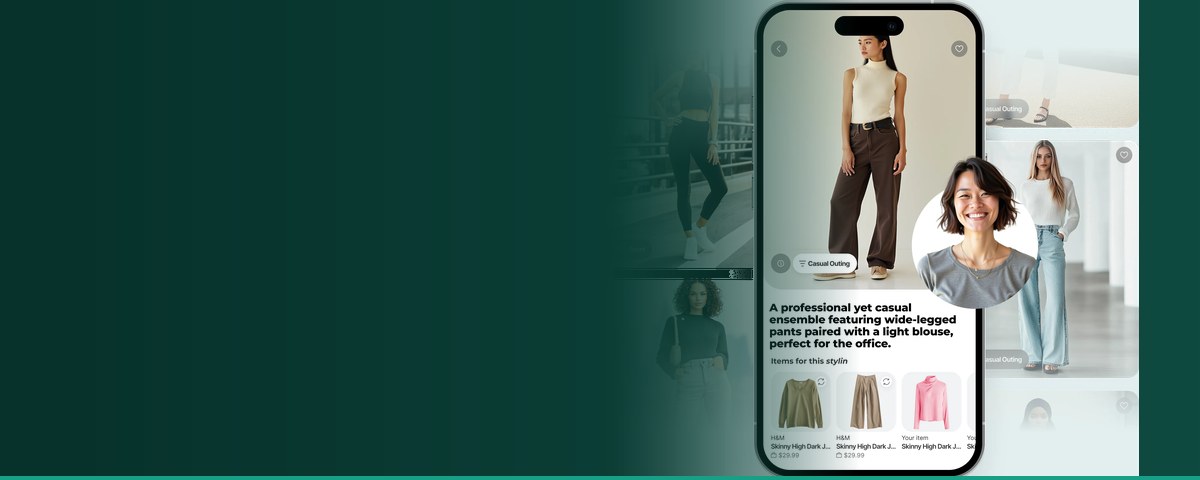
The morning wardrobe panic is optional. Stylin builds daily outfit ideas from your real wardrobe — tuned to your body, your taste, and whatever's on your schedule. Getting dressed should take three taps, not thirty minutes — the Vibe Feed is the fastest way in.