
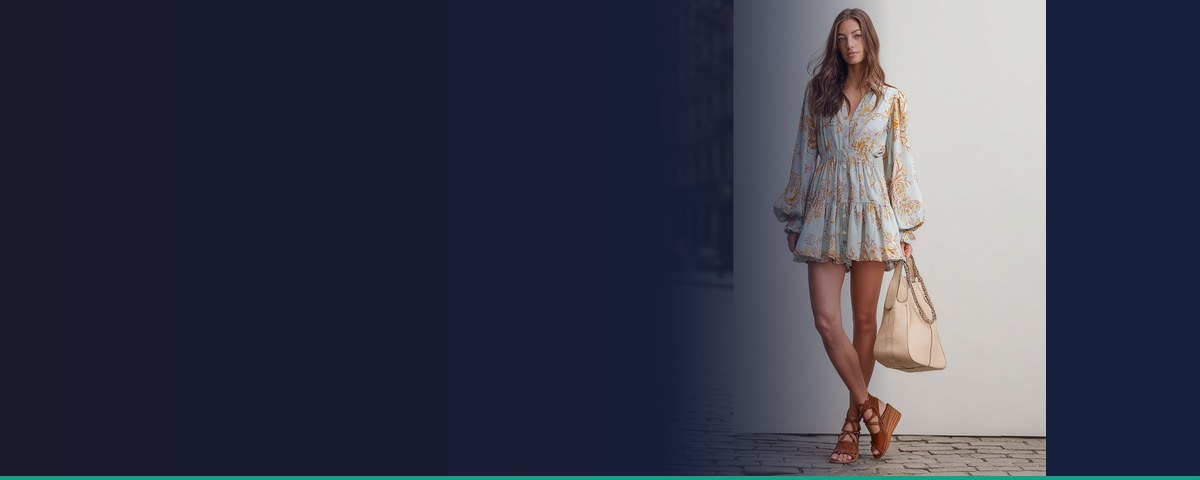
Your outfit won't get you the job, but the wrong one can create a distraction you don't need. The goal is simple: look like you already belong there, so the interview can be about your skills rather than what you're wearing.
The golden rule: dress one level up from what you think the company's day-to-day dress code is. Slightly overdressed signals respect; slightly underdressed can read as indifference.
By industry
The right outfit shifts with the sector. The formulas below name specific garments so you can build the look from what you own — or see at a glance what's worth buying or borrowing before the day.
Corporate, finance, and law
These environments still expect a high standard of formality, and they notice when you don't meet it. A well-fitted suit in navy, charcoal, or dark grey is the safest choice — and if you're unsure which neutrals flatter you most, colour analysis is a useful starting point.
Women: a tailored trouser or skirt suit in navy or charcoal, worn with a crisp white or pale-blue shirt or a fine-knit shell. A pencil skirt should sit on or just below the knee. Closed-toe court shoes with a low-to-mid heel keep you comfortable and formal. If you don't own a matching suit, a structured blazer over tailored trousers in the same tone reads almost as well.
Men: a single-breasted two-button suit in navy or charcoal, a white or light-blue shirt, and a plain or subtly textured tie. Lace-up leather shoes — Oxfords or Derbies — in black or dark brown, with matching belt. A pocket square is optional; a tidy, sober look beats a flashy one here.
Tech and startups
The dress code is usually smart-casual, but "casual" doesn't mean tracksuit. Aim for clean lines and neutral tones, and let fit do the heavy lifting.
Women: tailored trousers or dark, clean-cut jeans with a fine knit, a silk-look blouse, or a structured shirt. A relaxed blazer or a smart bomber lifts it. Loafers, clean white trainers, or low ankle boots all work.
Men: chinos or dark jeans with an Oxford shirt or a merino crew-neck. An unstructured blazer is the easiest way to look considered without looking corporate. Clean minimalist trainers, loafers, or Chelsea boots finish it. Skip the tie unless the company is visibly formal.
Creative, media, and design
You have more room here, but the brief is still intentional. Your outfit should reflect that you have taste — not that you treated it as an excuse to dress down. A signature piece (an interesting blazer, a distinctive colour, a well-chosen accessory) can work in your favour. A wide-leg trouser, a bold-but-considered knit, a sculptural earring, or a single statement coat all read as confidence rather than effort. The most convincing looks are an extension of your personal style, not a departure from it.
An interview outfit should feel like a slightly elevated version of you — not a costume.
Retail, hospitality, and customer-facing roles
Neat, clean, and put-together — you're showing them how you'd look in front of their customers. Neutral or brand-appropriate colours where relevant; if you know the company's uniform skews dark and smart, lean that way. Fit matters most of all: clothes that fit properly look more polished than expensive clothes that don't. For women, tailored trousers or a knee-length skirt with a simple top and clean flats or low heels. For men, chinos or smart trousers with a collared shirt, ironed and tucked, and clean leather shoes.
Beyond the standard interview
The format changes the stakes more than people expect. A panel notices detail you'd get away with one-to-one; a full day reveals whether your outfit is genuinely comfortable.
Panel interviews
With several people studying you at once, fit and finish carry more weight — anything ill-judged is seen from four angles. Stick to a clean, classic outfit with one quietly interesting element rather than something busy. Make sure the look holds up seated, since you'll be sitting across a table for the whole conversation.
Second and final rounds
By the final round you may be meeting senior leadership, so nudge the formality up a notch from your earlier interviews. It's fine to repeat a proven outfit if it worked — consistency reads as self-assurance, not a lack of options — but make sure it's freshly pressed and the shoes are clean again.
Assessment centres and presentations
These are long, active days: group exercises, timed tasks, standing to present. Dress to the formality of the role, but prioritise pieces you can move, sit, and present in for hours without fidgeting. If you're presenting, wear something with a defined shape on top — a blazer or structured knit photographs and projects better than a soft, shapeless layer, and gives you a place to clip a microphone.
The video interview
Most of what applies in person applies on screen — with one addition: avoid very fine stripes or small geometric patterns, which can strobe on video. Wear something on top that's interesting enough to register (a flat grey hoodie disappears), but not so busy it's distracting. Solid mid-tones in a colour that suits you tend to read best on camera. Dress fully, not just from the waist up — if you stand to fetch something, a smart top over pyjama bottoms is exactly the moment that undoes you. Your background matters too: a tidy, neutral space, with the light in front of you rather than behind, lets the interviewer focus on your face.
Accessories, bags, and grooming
The details are what tip a good outfit into a polished one — or quietly undermine it. The aim is restraint: enough to look considered, not so much that it competes with you.
- Carry one bag, not two — a structured tote or slim laptop bag in a neutral colour. Juggling a handbag, a rucksack, and a coat at the door reads as flustered.
- Keep jewellery minimal: a watch, a ring, simple earrings. Anything that jangles or catches the light will distract a panel.
- Match your metals and leathers loosely — belt to shoes, watch to other hardware. It's a small thing the eye registers anyway.
- Nails clean and neutral; hair tidy and off your face. Fresh, light grooming beats heavy fragrance every time.
- Bring a folder or slim portfolio for spare CVs — it gives your hands something to do and looks prepared.
Dress the part, from your own wardrobe
Stylin picks interview-ready outfits from the clothes you already own — free on the App Store.

Dressing for your shape and colouring
The most flattering interview outfit is one cut to your proportions and worn in tones that suit you — that's what makes an inexpensive look expensive. Fit comes first: trousers that break cleanly at the shoe, a jacket that closes without pulling, sleeves that end at the wrist bone. Choose silhouettes that work with your frame rather than fighting it, and have anything that's close-but-not-quite taken in by a tailor — it's the cheapest upgrade you can make.
Colour does the rest of the work. Wearing shades that complement your skin, hair, and eyes makes you look healthier and more awake, which matters when first impressions are formed in seconds. If you're not sure which neutrals and accents do that for you, working out your best palette will point you in the right direction, and grounding the whole look in what already feels like you keeps it from reading as a borrowed costume.
Practical checklist
None of this should be left to the morning of, when you're already nervous and short on time. Do the work the night before so the day itself is just getting dressed and leaving.
- Lay out the full outfit, including shoes and accessories — so a missing button or odd sock can't ambush you at 8am.
- Check for wrinkles, missing buttons, or marks, and steam or iron what needs it — creases read as carelessness even when nothing else is wrong.
- Try on the full outfit sitting down, not just standing — gaping shirts and rising hems only show up once you're in a chair.
- Break in any new shoes before the day — blisters change how you stand, walk, and carry yourself.
- Check the route, the weather, and where you'll arrive — a smart coat and an umbrella mean you turn up dry and composed.
On the day: get dressed with time to spare, eat something, and do a final mirror check — front and back — before you leave. Carry any layers you might shed so you're not over-warm and flushed when you walk in.
What to avoid
A few things create friction out of all proportion to how small they are. Steer clear of:
- Strong perfume or aftershave. You don't know the interviewer's sensitivities, and a small room amplifies it. Fragrance is the one thing you can't take off once you've arrived.
- Heavy branding or slogans — unless the logo is directly relevant to the role. Loud branding pulls attention away from what you're saying.
- Clothes in poor condition. Even in casual settings, a ripped hem, a stain, or scuffed shoes reads as carelessness — and people extend that judgement to your work.
- Anything you've never worn before. A new outfit can pinch, ride up, or simply feel wrong, and that discomfort shows. Interviews are not the time for experiments.
- Distracting extremes — very high heels you can't walk in, a skirt you keep tugging, a collar that won't sit. If you're managing your clothes, you're not present in the conversation.
Frequently asked questions
What's the golden rule for interview outfits?
Dress one level up from what you think the company's day-to-day dress code is. If staff wear jeans and trainers, arrive in smart-casual; if they wear smart-casual, lean towards a blazer. Being slightly overdressed signals that you've taken the meeting seriously and respect the people in the room, whereas being slightly underdressed can read as indifference — even when it isn't. When you genuinely can't tell what the culture is, default to the more formal option. It's far easier to relax a look that's a touch sharp than to recover from one that's too relaxed.
What should you avoid wearing to a job interview?
Strong perfume or aftershave, since you don't know the interviewer's sensitivities and a small room amplifies it. Anything heavily branded or slogan-led, which pulls attention away from what you're saying. Clothes in poor condition — ripped hems, stains, or scuffed shoes — because people quietly extend that carelessness to your work. And anything you've never worn before: a new outfit can pinch or ride up, and that discomfort shows. An interview is not the moment to test an experiment; wear something proven that you already know feels right.
What should I wear to a video interview?
The same principles apply as in person. Avoid very fine stripes or small geometric patterns, which can strobe and shimmer on camera. Wear something on top that's interesting enough to register — a flat grey hoodie disappears — but not so busy it distracts. Solid mid-tones in a colour that suits you tend to look best. Dress fully rather than just from the waist up, in case you need to stand. Sit facing the light, keep your background tidy and neutral, and the interviewer's focus stays on your face.
How should I dress differently for a panel or final-round interview?
For a panel, fit and finish matter more because several people are studying you at once and any detail is seen from multiple angles. Keep the outfit clean and classic with one quietly interesting element, and make sure it holds up while seated. For a second or final round, where you may meet senior leadership, nudge the formality up a notch from your earlier interviews. Repeating a proven outfit is fine — consistency reads as self-assurance — just make sure it's freshly pressed and the shoes are clean again.
Does my interview outfit really affect whether I get the job?
Not directly — your answers and experience decide that. But the wrong outfit creates a distraction you don't need, and first impressions form within seconds of you walking in. Looking appropriate lets the interviewer focus on your skills rather than on what you're wearing, and feeling well put-together genuinely steadies your nerves and posture. Think of it as clearing the stage rather than winning the part: the goal is to look like you already belong there, so nothing about your appearance gives anyone a reason to pause.
Can I wear jeans to a job interview?
Occasionally, and only when you have real evidence the culture allows it — a startup where you've seen the team in jeans, a creative studio, a workplace where you already know people. Even then, make them the sharpest version: dark, clean, no rips or fading, with a proper shoe and a blazer or a well-cut knit on top so the outfit reads as a deliberate choice rather than a default. If you're guessing about the culture, don't. The cost of being slightly too smart is a moment of mild self-consciousness; the cost of being too casual is an interviewer wondering how seriously you're taking the role.
What should I wear if I'm told the interview is casual?
Take it as permission to drop the suit, not to stop thinking. “Casual” from a hiring manager almost always means smart-casual — they're telling you not to arrive in formal tailoring and look out of step with the team, not that anything goes. A good default is one clearly considered piece paired with something relaxed: a blazer with dark denim, or a good knit with tailored trousers and clean shoes. The finish is what carries it. In casual dressing there's no suit doing the work for you, so pressed fabric, clean footwear and a good fit are the whole signal.
If you're working out what you actually own that fits this brief, Stylin can build looks from your wardrobe and flag where a gap might be worth filling before the big day.